

How We Can Use Pinterest Predictions to Shape Future Design
How We Can Use Pinterest Predictions to Shape Future Design
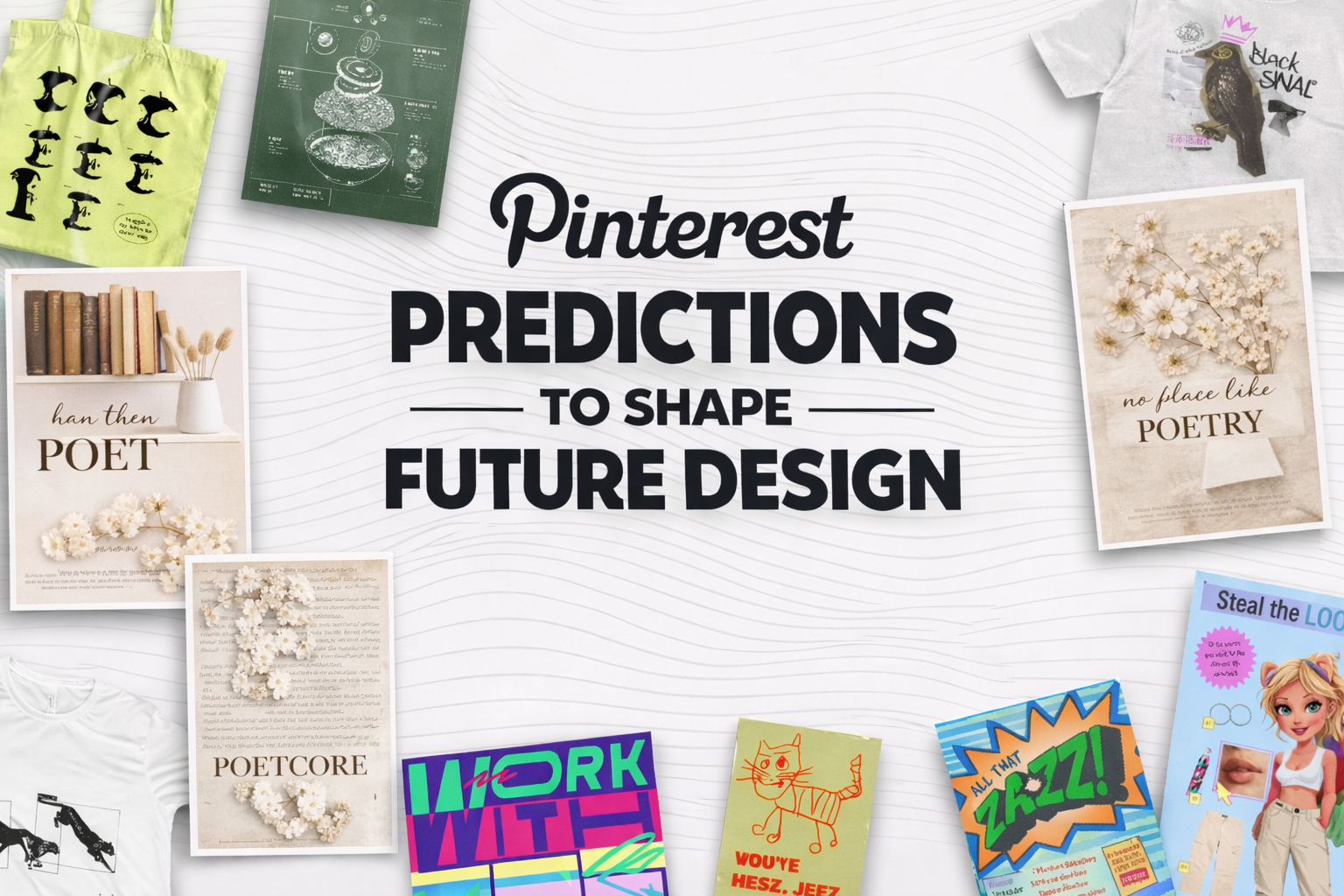
Let's Be Honest About Trends
Okay, full disclosure: I used to roll my eyes at trend reports. Hard.
They felt like those things your client's marketing person would email you at 7am with "THOUGHTS???" in the subject line. Like someone was trying to convince me that everyone needed to design in "Viva Magenta" or whatever Pantone was pushing that year.
But then I started actually looking at why certain things were trending. Not the colors or the styles themselves, but what was driving them. And that's when it clicked these aren't instructions. They're symptoms. People searching for "afrobohemian style" aren't just looking for throw pillows. They're looking for connection to something real.
That's useful information if you're designing literally anything people have to use.
Culture Doesn't Wait for Designers to Catch Up
There's this whole wave right now around cultural fusion and heritage-forward aesthetics. You see it everywhere fashion, interiors, even the way people are decorating their Instagram grids.
What does that have to do with a checkout flow? More than you'd think.
Because when people spend all day expressing themselves in these really personal, culturally rich ways... and then they open your app and it looks like every other Silicon Valley product with the same blue buttons and the same "friendly" copy there's a disconnect.
I've started noticing:
- Warmer color palettes that don't look like a hospital
- Layouts that have some personality instead of that grid-everything approach
- Design systems that let different parts of the product feel different (crazy concept, I know)
It's not about being trendy. It's about not making people feel like they're interacting with a AI or vending machine.
Maximalism Isn't Chaos (Usually)
Minimalism was safe. Clean. Easy to defend in design reviews.
But I'm seeing more designers get brave lately. Bigger type. Actual illustrations instead of those terrible corporate stock photos. Layouts that have... drama?
The maximalist interior trend isn't about throwing everything at the wall. It's about having confidence in your choices. People are putting weird vintage lamps next to modern furniture and it works because they are committed to it.
Same with design. The projects I'm most proud of aren't the ones where I played it safe. They're the ones where I let the typography be loud or used three different layout styles because that's what the content needed.
You just have to mean it.
People Like Weird (When It's Good Weird)
I've been watching these glitchy, futuristic aesthetics gain traction and honestly? I think people are bored.
We've been designing everything to be "intuitive" and "frictionless" for so long that it all feels the same. Sometimes you want an interface that surprises you a little. That does something unexpected with a hover state or has a transition that makes you go "wait, how'd they do that?"
Not confusing. Not broken. Just... interesting.
The aliencore aesthetic isn't about making your app look like a spaceship. But maybe it's permission to try that one animation you've been sketching in your notebook. Maybe users don't need everything explained upfront. Maybe a little mystery is okay.
Texture in a Textureless Medium
This is the one that keeps me up at night in a good way.
People are obsessing over jelly blush and layered perfumes and all these very tactile, sensory experiences. Meanwhile, we're over here designing for flat glass rectangles.
But the best designers I know are figuring out how to translate that sensory craving:
- Gradients that feel soft instead of that harsh linear stuff
- Micro-interactions that respond to touch in satisfying ways
- Animation timing that feels natural, not robotic
I tested two versions of a button animation last month. Same button, different easing curves. The one with the slightly "bouncier" timing got better feedback. People couldn't articulate why—they just said it "felt nicer."
That's the stuff that matters.
Everyone's Tired
The travel trends tell you everything. Ethereal escapes. Adventure tourism. "Darecations" (which, sure, terrible name, but the sentiment tracks).
People don't want to grind anymore. They're exhausted.
Your website probably isn't a travel app, but the principle still applies. Does your product feel like another task? Another dashboard to check? Another notification demanding attention?
Or does it give people space?
Some of my recent work has intentionally slowed down:
- Longer scroll animations that don't rush
- More white space even when stakeholders push back
- Removing features instead of adding them
One PM asked me why I made the onboarding "so slow." I told him it wasn't slow it was deliberate. Users are tired of being rushed. Sometimes they just need three seconds to actually read something.
What a Designer Told Me
I was talking to Sarah (senior product designer, works on some big consumer apps) about this whole thing. She said something that's been rattling around my head:
"Trends show you where people's heads are at. Good design asks why they got there."
Yeah. That.
The Point
I don't follow Pinterest predictions like they're gospel. But I do pay attention to them.
Not because I want my work to look trendy. Because I want it to feel relevant. Like it was made by someone who's paying attention to how the world is changing, what people are craving, what they're sick of.
When you design from that place “from actually noticing what people care about” the work just hits different.
It stops feeling like "user experience design" and starts feeling like making things for actual humans who have taste and feelings and opinions.
Which, honestly, is the only kind of design worth doing.
Let’s work together to build your dream


info@krafteliet.com


We design interfaces that do more than just look good they work hard, feel intuitive, and convert.
We design interfaces that do more than just look good—they work hard, feel intuitive, and convert.


.png)